Build Walls That Hold Slopes and Define Spaces
Retaining Walls in Califon for yards with erosion problems and unusable sloped areas
Precise Landscaping installs retaining walls for homeowners in Califon and surrounding areas who need to manage sloped terrain, prevent soil erosion, or create level outdoor spaces where the yard currently drops off unevenly. You meet with the crew to walk the property and identify where the wall will run, how high it needs to be, and what materials will match your existing landscape. The installation involves excavating the slope, setting a gravel base, and stacking interlocking blocks or natural stone in a way that channels water away from the structure and keeps soil from washing downhill during heavy rain.
Sloped yards lose topsoil every time it rains, leaving exposed roots and uneven ground that's difficult to mow or plant. A retaining wall holds that soil in place and creates a flat terrace above or below the structure, turning wasted slope into usable lawn or garden space. In New Jersey, freeze-thaw cycles can shift poorly built walls over time, so the base must extend below the frost line and the wall must include drainage aggregate behind the blocks to prevent water pressure from building up and pushing the structure forward.
If your yard has a slope that's eroding or you want to add a patio where the ground currently drops away, reach out to discuss retaining wall options that fit your property's layout and soil conditions.
How Retaining Walls Change Yard Function and Layout
You choose from materials like concrete block, natural stone, or timber depending on the look you want and how much height the wall needs to retain. The crew excavates the slope to create a level trench, fills it with compacted gravel, and begins stacking the first course of blocks or stones. Each row is set back slightly from the one below it to create a stable batter, and drainage pipe is installed behind the wall to carry groundwater away before it can saturate the soil and add pressure.
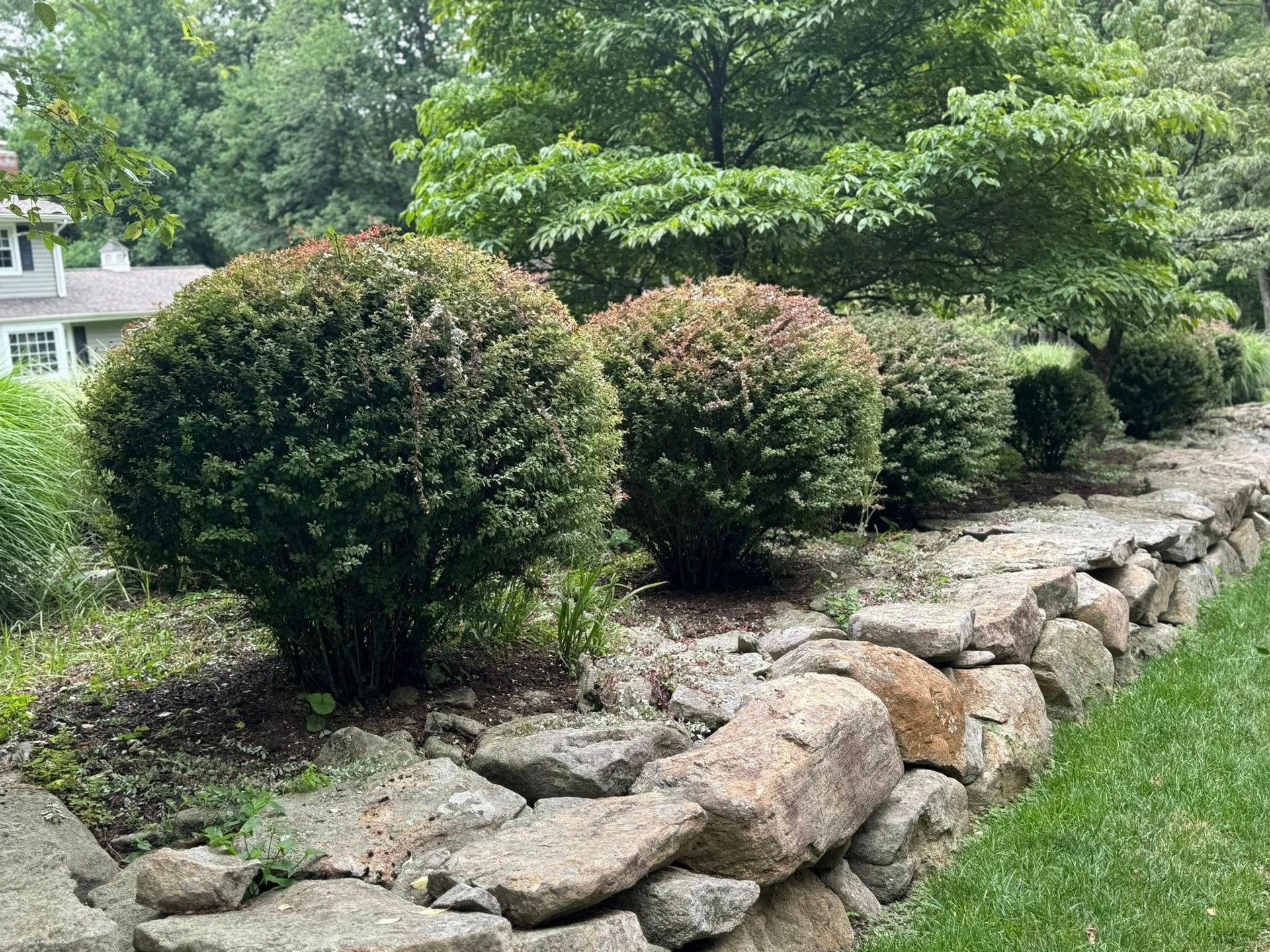
Once the wall is complete, you'll see a clean horizontal line where the slope used to be, with level ground on one side and retained soil on the other. The space above the wall can be sodded, mulched, or planted, and the area below can be used for walkways, patios, or additional planting beds. Precise Landscaping matches the wall material to your existing hardscape so the structure looks intentional rather than added as an afterthought.
The installation does not include grading work beyond what's needed for the wall itself, and it doesn't address drainage issues elsewhere on the property. If your yard has standing water or runoff problems that originate uphill from the wall, those need separate solutions. Retaining walls hold soil and create level spaces but don't redirect surface water unless paired with additional drainage work.
Homeowners in Califon often ask how high a wall can be built and whether permits are required, so here are answers based on local conditions and standard building practices.
What You Should Know Before Installing a Wall
What height requires a structural engineer's design?
Walls over four feet tall typically need engineered plans to ensure they can handle soil pressure and meet local building codes, especially if the slope is steep or the soil is clay-heavy.
How deep does the base need to go?
The trench should extend at least six inches below grade and be filled with compacted gravel to prevent settling, and in Califon's climate, the base should sit below the frost line if the wall is holding significant weight.
Why is drainage placed behind the wall?
Gravel backfill and perforated pipe allow groundwater to escape rather than building up pressure that can bow or topple the wall over time, especially during spring thaw or heavy storms.
When should you use natural stone instead of block?
Natural stone offers a more rustic appearance and works well in wooded or informal landscapes, while concrete block is faster to install, more uniform, and better suited to modern or geometric designs.
What happens to plants growing on the slope?
Existing plants are usually removed during excavation, so you'll need to replant or install new landscaping after the wall is finished and the soil has been backfilled and graded.
If you're ready to stop losing soil to erosion or want to add usable space to a sloped yard, contact Precise Landscaping to discuss a retaining wall design that works with your property's topography and your long-term landscape goals.